How to Choose an Aromatherapy Diffuser for Malaysian Homes
Choosing your first Aromatherapy diffuser Malaysia purchase is less about “the best model” and more about matching the diffuser to your space, your preferred scent strength, and how much maintenance you’re willing to do. A diffuser that works beautifully in a small bedroom may feel weak in a living room, while a powerful option can be overwhelming (or messy) in a compact office.
This beginner guide explains the main diffuser types used in Malaysian homes, how to estimate what will work for your room size, what “scent throw” really means, and the practical upkeep that keeps your home fragrance experience clean and consistent.
Step 1: Start with your room size
Room size is the fastest way to narrow your options. You don’t need exact square footage to make a good choice—just a realistic idea of whether your space is small (bedroom), medium (larger bedroom or study), or large/open (living room with open dining area, or an open-plan office).
- Small rooms (bedroom, small office nook): A gentle output is usually enough. You’ll want control so the scent doesn’t become too intense over time.
- Medium rooms (study, master bedroom, enclosed living room): Aim for moderate output and a diffuser style that can run consistently for a few hours without constant refilling or adjustment.
- Large or open-plan areas: These spaces “eat” fragrance. Consider higher-capacity options, stronger throw, or more than one diffuser placed strategically.
Also consider airflow. Air-conditioners, ceiling fans, open windows, and even kitchen exhaust fans change how scent travels. In a breezy space, you may need stronger throw or better placement (away from direct airflow that pushes scent straight out of the room).
Practical tip: If your living room opens into the dining area or hallway, treat it like a larger room than it looks. If you want fragrance mainly around your sofa area, place the diffuser closer to where you sit rather than at the far corner.
Step 2: Understand diffuser types (and what they’re best at)
When shoppers say “diffuser,” they may mean very different products. In Malaysian homes, the most common options are ultrasonic mist diffusers and reed diffusers. Each creates a different “fragrance experience,” so choosing the right type is as important as choosing the scent itself.
Ultrasonic (water + essential oil) diffusers
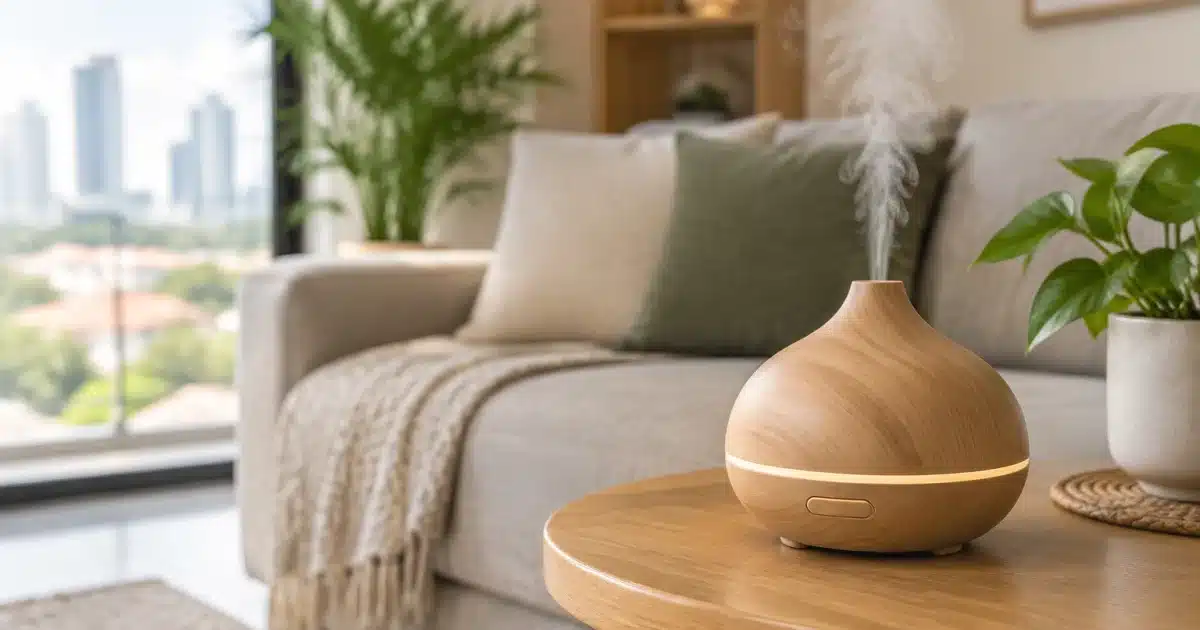
Ultrasonic diffusers use water and vibrations to create a fine mist. They’re popular because they make the room feel fresh quickly and many have timers or intermittent modes.
- Best for: People who want a noticeable fragrance effect within minutes, and who like switching scents often.
- Room fit: Small to medium rooms are easiest; large open spaces may need a higher-capacity unit or longer runtime.
- Maintenance level: Medium. You’ll need regular cleaning to avoid residue and to keep the mist output consistent.
Good to know: “More mist” doesn’t always mean “better.” Too much mist in a humid environment can feel heavy, and can lead to dampness on surfaces if placed too close to walls or electronics.
Reed diffusers (no electricity, steady scent)
Reed diffusers use sticks (reeds) to draw scented oil upward and release it into the air. They’re simple, silent, and consistent—great if you don’t want to think about refilling water or pressing buttons.
- Best for: Set-and-forget daily fragrance in bedrooms, bathrooms, entryways, and work desks.
- Room fit: Small to medium rooms, or targeted zones in larger spaces (for example, near the TV console area rather than trying to cover the entire open-plan layout).
- Maintenance level: Low. Occasional reed flipping and careful placement are usually enough.
Placement matters: Don’t place reed diffusers where they can be knocked over easily, and avoid direct sunlight that can degrade the oil faster.
Room sprays and scented lifestyle products (fast refresh, not a diffuser)
Room sprays can be useful in Malaysian homes when you want a quick “reset” before guests arrive, but they don’t provide the continuous scent experience most people expect from a diffuser. They can also complement a diffuser—spray first, then let your diffuser maintain the ambience.
Step 3: Choose the right “scent throw” (how far the fragrance carries)
Scent throw is the strength and reach of a fragrance in a space. It answers: “Will I smell it only when I’m close, or throughout the room?” For beginners, it’s easy to overbuy something intense and then stop using it—so treat scent throw as a comfort decision, not just performance.
Light throw: subtle, close-range comfort
Light throw is ideal if you’re sensitive to strong smells, share a room, or want fragrance mainly near your bed or work desk. It’s also a safe choice if you’re new to home fragrance and don’t yet know your preferences.
Medium throw: balanced for everyday living
Medium throw is what most households mean by “my room smells nice.” You notice it when you walk in, but it doesn’t overpower. Many people prefer this level for living rooms and home offices.
Strong throw: statement scent for bigger spaces (or scent lovers)
Strong throw can be great for open-plan areas or for people who love a noticeable fragrance presence. The trade-off is that you’ll want better control (timers, fewer reeds, or shorter run times) so it doesn’t become too intense.
How to adjust throw at home (simple controls):
- Ultrasonic diffuser: Use fewer drops, choose intermittent mode, or run for shorter sessions (for example, 30–60 minutes, then reassess).
- Reed diffuser: Use fewer reeds for a lighter effect; add more reeds for stronger diffusion. Flip reeds occasionally for a boost.
- Placement: Central placement increases reach; corner placement reduces it. Avoid placing directly under strong airflow that disperses scent too quickly.
Step 4: Match fragrance style to the room (and who uses it)
Home fragrance is personal, like perfume. The “right” scent depends on mood, activity, and even how long you spend in that room. If you already enjoy personal fragrance—whether you like fresh, woody, or sweet styles—use that preference as a starting point for home scents too.
- Bedroom: Many beginners prefer softer, relaxing profiles—clean, herbal, or lightly floral—so the scent doesn’t compete with sleep.
- Living room: Fresh, uplifting, or cozy notes can work well because it’s a shared space. Aim for a crowd-pleasing fragrance that feels “clean” rather than too personal.
- Home office: Consider crisp, focused scents. You want something that stays pleasant after hours at your desk.
- Bathroom/entryway: Smaller spaces can handle a clearer, brighter scent profile. A reed diffuser is often a neat option here because it’s silent and always-on.
Shared homes tip: If you live with family, roommates, or colleagues, start with a medium or lighter throw and a more universally pleasant fragrance profile. Strong, sweet, or very smoky notes can be divisive—great for personal taste, but not always ideal for shared areas.
Step 5: Maintenance basics (what you’ll actually need to do)
Maintenance is the part beginners forget—until the diffuser output weakens, the scent starts to smell “off,” or residue appears. Choosing something you can maintain easily will keep your fragrance experience reliable.
Ultrasonic diffuser maintenance checklist
- Daily/after use (quick): Empty leftover water if you won’t run it again soon. This helps prevent stale smells and buildup.
- Weekly (or more often if used daily): Wipe the water tank and ultrasonic plate gently. A soft cloth or cotton bud helps remove residue.
- Deep clean occasionally: If you notice reduced mist, unusual smell, or visible film, deep clean according to the manufacturer’s instructions. Avoid harsh scrubbing that can damage internal parts.
- Placement: Put it on a stable surface. Keep it away from direct electronics, paper stacks, and wooden surfaces that may be sensitive to moisture.
Beginner mistake to avoid: Using too much oil “for a stronger scent.” This can increase residue and make cleaning harder. Start low, then adjust.
Reed diffuser maintenance checklist
- Flip reeds: Every so often to refresh the scent throw. Do it carefully over a tissue to avoid drips.
- Adjust reeds count: If it feels too strong, remove a few reeds. If too light, add more.
- Keep away from heat/sun: This helps the oil last and smell consistent.
- Protect surfaces: Place the bottle on a tray/coaster to prevent accidental stains.
A quick buying checklist (so you can choose confidently)
Use this simple checklist when comparing options online or at a retail counter. It keeps the decision practical—especially for first-time buyers.
- Room: Is it small, medium, or open-plan? Is there strong air-conditioning airflow?
- Type: Do you prefer mist (ultrasonic) or steady passive scent (reed diffuser)?
- Scent throw: Do you want subtle, balanced, or strong? Will anyone else share the space?
- Routine: Are you okay refilling water and cleaning weekly, or do you want low-maintenance?
- Placement: Do you have a safe, stable surface away from pets/kids and away from direct airflow?
If you still feel unsure, start with a smaller, easier setup in the room you use most (often the bedroom or home office). Once you learn what strength and fragrance style you enjoy, it becomes much easier to scale up to larger spaces.
Related home fragrance picks you can explore
If you’re considering a low-maintenance option for daily scenting, reed diffusers are a simple starting point. Here are a few options you can browse:
Conclusion: pick the diffuser that fits your space and habits
The best diffuser choice is the one that matches your room size, gives the scent throw you enjoy, and fits your maintenance style. For many Malaysian homes, the easiest path is:
- Small room beginner: Start gentle (light-to-medium throw) and prioritise control.
- Busy routine: Consider a reed diffuser for consistent, low-effort fragrance.
- Open-plan living: Go for stronger throw.
Frequently Asked Questions
For a small bedroom, a light-to-medium output ultrasonic diffuser (with timer/intermittent mode) or a reed diffuser with fewer reeds is usually ideal. Both options reduce the risk of an overpowering scent in a compact space and are easier to adjust as you learn your preferences.
Start by judging whether your living room is enclosed or open-plan. Enclosed rooms often feel comfortable with a medium throw, while open-plan areas may need a stronger throw or a more strategic placement (near the seating area). If the scent feels too strong, reduce runtime (ultrasonic) or remove a few reeds (reed diffuser).
If you use it daily, a quick wipe and emptying leftover water after use helps a lot, with a more thorough clean about once a week. Clean sooner if you notice reduced mist, residue, or the scent starts to smell stale, as buildup can affect performance and fragrance quality.
This can happen due to scent adaptation (your nose gets used to it), poor airflow in that spot, or reeds that need flipping. Try flipping the reeds carefully, moving the diffuser slightly away from corners or strong direct airflow, or adding a few more reeds for stronger diffusion.
Essential oils are typically used with ultrasonic diffusers that are designed for water-and-oil misting. Reed diffusers usually require diffuser oil formulated for reeds (different viscosity and performance). Always follow the product instructions for the specific diffuser type to avoid damage or poor scent performance.